
How to Build School Reputation with Custom Badges
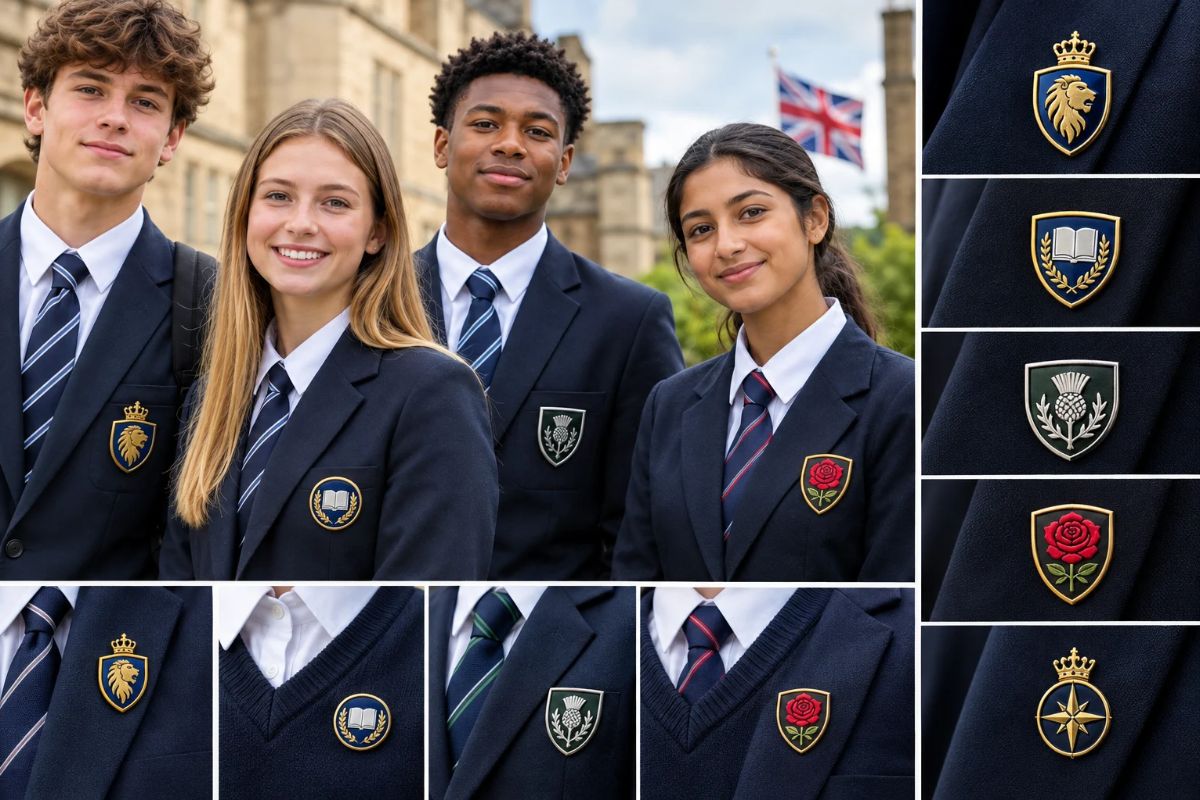
Families and visitors often form an opinion of a school before they speak to anyone. They notice the students at the gate, on a bus or at an open day, and the uniform is a large part of what they see. A crest on a blazer pocket is worn by every student every day.
Badges are also one of the lower-cost ways to carry that identity. They can be sewn onto plain garments bought from different shops, and they can mark houses, clubs and leadership roles. This guide explains how schools can use them well and what to plan before ordering.
Custom School Badges Are Small Emblems That Carry Your Crest
A school badge is a small emblem fixed to a blazer, jumper, cap or PE kit. Most are either embroidered or woven. Embroidered badges have a raised, stitched texture. Woven badges are flatter and handle fine lines and small lettering better, which suits detailed crests.
Badges attach in three common ways. Sew-on badges last longest through repeated washing. Iron-on badges are quick to apply but can lift after many washes. Velcro badges come off easily, so one garment can carry different badges over time.
Schools use them for the main crest, house colours, clubs, sports teams and leadership roles such as prefects.
Badges Make Your School Crest Easy to Recognise
A crest is the quickest way for people to tell which school a group of students belongs to. When the same crest appears on every blazer and jumper, visitors, parents and local people begin to link it with the school. That recognition builds over time, through open days, school trips and the daily walk to the gate.
Custom school badges keep the crest consistent. The same design is stitched onto each badge, so it looks identical whichever shop the garment came from. A simple design with a clear outline reads best at a small size.
Before placing a full order, ask the supplier for a sample badge and check that the crest and any lettering still read clearly on a blazer.
Plain Garments With a Sewn-On Badge Keep Uniform Costs Down
In England, the Department for Education’s guidance now limits how many uniform and PE items a school can require to carry its branding. The limits apply from September 2026.
| School type | Limit on compulsory branded items |
| Primary | 3 or fewer |
| Secondary and middle | 4 or fewer, if one of them is a tie |
The limits apply to England only. Wales, Scotland and Northern Ireland are not covered, because education is devolved there.
The limit counts the items a school requires pupils to buy with its branding on. A secondary school that requires a branded blazer, tie, jumper and PE top has already reached four, so any other branded item has to be optional.
This is where badges help. A school can keep its required branded items low, let families buy a plain jumper or polo shirt from any shop and ask them to add the school badge. Plain garments are typically cheaper than branded ones and the crest still appears on every student.
The guidance does not clearly say how a badge sewn onto a plain garment is counted, so check this against your own uniform policy and the DfE guidance before you decide.
Role and Achievement Badges Show What Your School Values
A badge on a blazer tells everyone in the corridor what a student has been trusted with or recognised for. The badges a school chooses to give show what it rewards.
- Leadership roles: Prefects, house captains and peer mentors wear a badge for the year they hold the role. A Year 7 who is lost on the first day can spot who to ask.
- Attendance: A badge for a full term without absence recognises the student who turned up every day, something a grade list never shows.
- Kindness: Some schools give a badge to the student a teacher nominates for looking after a new starter in the first few weeks.
- Subject and sport badges: These are usually for work that takes a whole term, like a science project or a season in the school team. A student can earn one without ever winning anything.
Keep the list short. A badge given to half the year stops being noticed, so each one should have a reason a teacher can state in one sentence.
Group Badges Give Students a Team to Belong To
A Year 9 student can be in a form, a house and the football squad all at once. Badges let each of those show on the uniform without adding more garments to buy.
Houses Use Velcro
House badges are most visible on sports day, when the whole field splits into teams. Velcro suits this because the badge comes off after the event and the blazer goes back to normal on Monday. The same idea works across the year, with a netball badge in autumn and a cricket one in summer.
Teams Earn Caps
Custom cap badges suit school teams that award caps for playing in fixtures. A cap with the school badge sewn on is something a student can keep after leaving.
Clubs Stay Small
A chess or drama badge may be worn by only a handful of students. That is fine, since the group is already small and the badge simply tells others what they do.
Well-Made Badges Stay Neat Through a Full School Year
A badge that frays after a few washes or fades against the blazer is noticed by parents straight away. Quality shows in small checks done before the order.
Check the Thread
Ask for a sample and wash it once with a school jumper. Look at the edges for loose stitching and compare the thread colour with the fabric. A navy badge on a navy blazer should look like it belongs there.
Choose the Attachment
| Attachment | Lasting power | Ease of use | Best for |
| Sew-on | Longest | Needs a needle or a local alterations shop | Blazers and jumpers worn daily |
| Iron-on | Shorter, can lift after many washes | Quick at home | Spare items and PE kit |
| Velcro | Depends on the backing | Swaps in seconds | Event and seasonal badges |
Think About Young Children
Pin-backed badges are not suited to primary pupils, since a pin can open or be pulled out. A sewn-on badge with a flat back is the safer choice for younger year groups.
Start With One Badge and Build the Programme From There
Most schools begin with a single design, usually the crest, and add others once it works. When comparing custom badges UK suppliers, ask each for a sample before any bulk order. One sample shows you the stitching, the colours and how the badge sits on a real blazer.
- Pick one purpose: Decide whether the first badge is the main crest, a prefect badge or a house badge. Starting with one keeps the cost and the workload manageable.
- Read your uniform policy: If you are in England, read the DfE guidance on branded items too, so the badge does not clash with the limits.
- Ask students to help with the design: The art club or school council can sketch the shield. They will be the ones wearing it.
- Test the sample: Wash it once and pin it to a blazer. Look at it from a few steps away.
- Write down how each badge is earned: Name who decides, so a student can see why a classmate received one.
- Tell parents early: Put it in the newsletter before the new term, with a note on whether the badge is sewn on or Velcro.
- Review at the end of the year: Look at which badges were worn, which came off and which nobody asked about.
FAQs
Why is a school badge important?
A badge shows which school a student belongs to. Parents, visitors and local people recognise it on a blazer or cap before they know anything else about the school. A badge for a role or achievement also tells other students what the school values.
How do you design a school badge?
Most schools begin with a shield or a circle and place a single symbol in the middle, often an open book or a torch. The school name or motto usually sits around the edge, and a short one reads better on a blazer pocket than a long one. A sample from the supplier shows whether the lettering still reads once it is stitched.
What is a school emblem called?
It is usually called a crest, a badge or a logo. Older schools often use a shield or coat of arms with a Latin motto. A seal is different because it is a stamp used on documents such as certificates.
Can I buy school badges online?
Yes. Schools can order role badges such as prefect or house captain, and families can buy the official crest for a blazer. Check that the badge matches your school’s uniform policy before you order, and ask for a sample first.
What is the best student badge?
It depends on what the school wants to recognise. Prefect, house captain and peer mentor badges suit leadership roles. Attendance and kindness badges suit students who may never top a grade list. A few well-chosen badges usually work better than many.
Wrapping Up
A school’s reputation is built on small things that families see every day. A crest that looks the same on every blazer, a prefect badge that a student has earned, and a house badge pinned on for sports day all say something about how the school is run. Badges cost little compared with most school projects, which makes them easy to start with.
Begin with the crest, test one sample, and add other badges only when the first one is working well. Once the school is comfortable with the process, the rest can follow gradually.

Meet Ryan, the most creative and passionate craftsman at CustomBadges.uk. He knows which type of badge works best for which garment. Whether you want customization guidance, tips for the application, or any other relevant information about badge making, Ryan will share some extremely valuable insights with you. His knowledge is way more than just an ordinary badge maker.