
Custom Badges for Business: How They Build Brand Identity
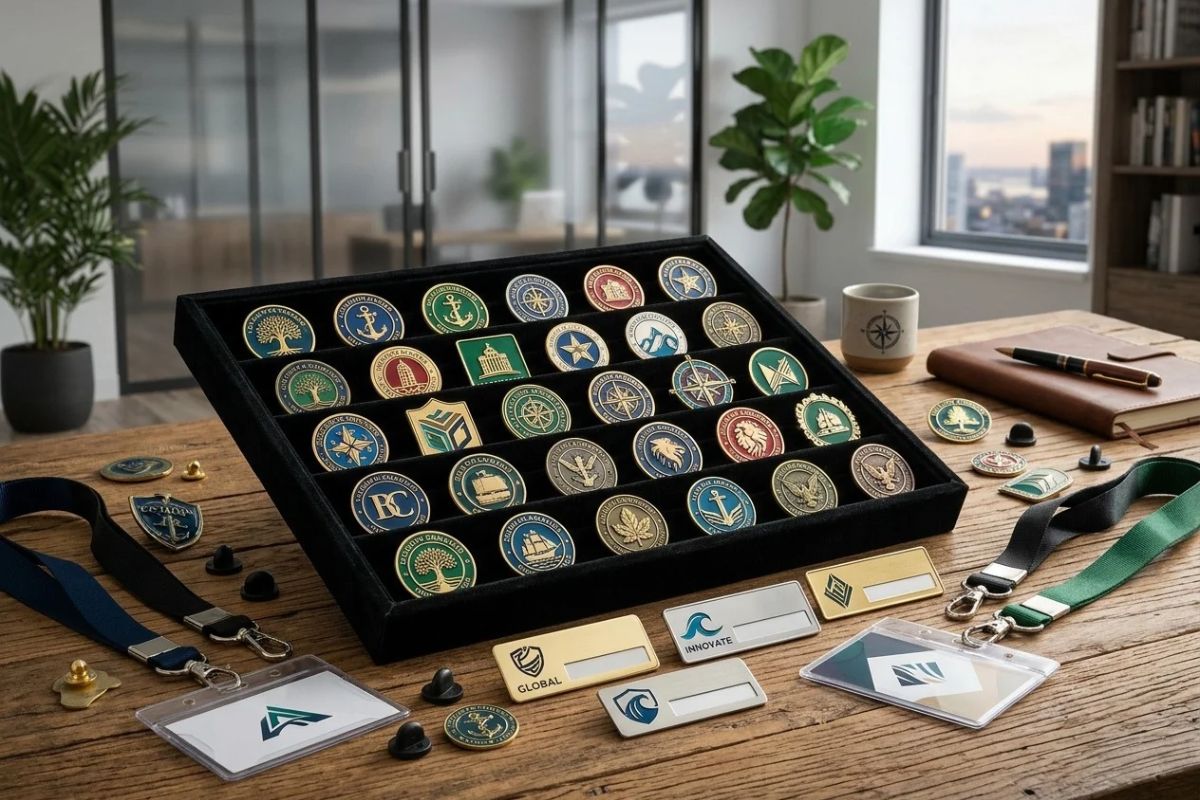
When a customer walks into a shop, a café or a hotel lobby, they usually look at the person serving them before anything else. A badge on that person’s shirt or jacket gives them a name, a logo and a brand colour in a single glance, and it stays there for the whole of their shift.
A badge is small, but it appears in nearly every interaction a team has with the public. This blog explains how it shapes the way a business is recognised and what to think about when choosing the right one for your own team.
A Badge is a Small Brand Touchpoint of a Brand Seen Daily
Custom badges are branded identifiers worn on uniforms, jackets, caps and bags. They put a business name or logo on the person the customer is dealing with, so the brand is present during the conversation itself.
A badge builds identity through three details:
- Logo: the same mark customers see on signs and packaging
- Colour: the brand shade that makes a team recognisable at a glance
- Name: a first name, added on some badges, that makes the interaction more personal
Matching Badges Make a Team Look Like One Brand
Staff often wear their own black trousers and plain tops, and no two shades match exactly. A badge fixes that by putting the same mark on every person.
One Badge Ties the Outfit Together
Once everyone wears the same badge in the same spot, the team reads as a group before anyone speaks. A team in mixed black tops looks like one crew when each person has the same logo on the chest. Keeping the position the same on every garment, such as the left chest, keeps the look tidy.
Repetition Builds Recall
A customer who sees the same logo and colours on the staff, then on the sign and the packaging, starts to connect them. The badge does that work every shift without any extra effort from the team.
Name Badges Make Staff Easier to Approach
A customer with a question first has to decide who to ask. A name on the badge makes that simple, because they can speak to someone directly instead of waiting to catch an eye or waving a hand.
The name also helps once the visit is over. A customer who was happy with the service can tell a manager exactly who helped them, so the praise reaches the right person. Someone who calls back or returns another day can ask for the same member of staff. Each person also serves under their own name, which gives them clear ownership of the service they give.
First names are usually enough. They are easy to read at a glance and keep staff surnames private.
Badges Work Across Many UK Industries
Badges are used wherever staff deal with the public, and each sector gets something slightly different from them.
- Hospitality: Waiting staff and front desk teams wear a name and logo, so guests know who to ask during a busy service.
- Retail: Staff stand out from customers on the shop floor, which saves people from hunting for help.
- Security: A visible badge shows someone belongs to the team, which matters at entrances and events.
- Schools and clubs: Crests on blazers and kit show who belongs, and they stay in use for years.
- Corporate teams: Badges on polos and jackets keep client-facing staff looking consistent at meetings and exhibitions.
Custom badges can be made to suit each of these settings. Some workplaces with safety rules, such as industrial sites, may need badges that meet specific requirements, so it is worth asking the supplier before ordering.
Embroidered Badges Give a Textured Premium Look
Embroidery is the traditional choice for smart uniforms, and it suits businesses that want staff to look polished without looking flashy. Here is how it looks, which designs suit it and what to check before ordering.
The Raised Look
Coloured thread is stitched onto a fabric base, so the logo sits slightly raised and the stitches stay visible. That texture looks more formal than a flat printed mark, which is why it appears on blazers, polo shirts and staff jackets.
Best Designs
Custom embroidered badges work best with a clear logo, bold shapes and solid colours. A hotel crest on a front desk blazer suits it well, because guests see it up close every day.
Fine Detail
Thread has a width, so very small text or thin lines can blur once stitched. A long tagline under a logo may need a larger badge, or may need to come off.
Attaching Them
Most embroidered badges are sewn on, so decide who will attach them, whether a tailor or the garment supplier, before the order arrives.
PVC Badges Handle Outdoor and Heavy Use
PVC suits workplaces where badges get wet, dirty or knocked around. Rain on a building site, a hosed-down yard or a crowded event all take a toll that fabric does not always handle well. Here is what the material offers and where it fits.
What PVC Offers
PVC badges are made from soft, flexible rubber that is waterproof and wipes clean. Custom PVC badges are moulded rather than stitched, so a lanyard clip or a jacket sleeve will not fray the edges the way thread can. The logo is raised in layers, which gives a 3D look with bold, solid colours and sharp lines that thread would blur.
Backing and Fit
PVC badges can be sewn on, fixed with Velcro or stuck on with adhesive. Velcro suits teams who swap badges between jackets, such as security staff who change layers with the weather. Site crews, event teams and outdoor gear all see rain and rough handling, while a reception blazer may suit embroidery better.
The Right Badge Depends on How It Is Worn
The choice comes down to where the badge is worn and what it goes through in a normal shift. Here is a quick side-by-side.
| Embroidered | PVC | |
| Look | Stitched, slightly raised | Moulded, 3D, glossy |
| Feel | Soft, fabric-like | Firm, rubbery |
| Fine detail | Can blur on small text | Holds sharp lines |
| Wet conditions | Suits indoor and everyday wear | Waterproof |
| Attachment | Usually sewn on | Sewn, Velcro or adhesive |
| Suits | Blazers, polos, front-of-house | Jackets, site wear, outdoor teams |
A hotel team in blazers and a site crew in hi-vis jackets both want a badge that looks right, but the daily conditions are very different. Start with the garment and the weather your team works in, then pick the type that fits.
Ordering Badges Takes Five Simple Steps
Most delays in a badge order come from missing details, so it helps to settle these five things before you contact a supplier.
- Decide where it is worn. Before ordering custom badges, note which garments they go on and what the team does in them, such as serving tables, lifting stock or working outdoors.
- Gather your artwork. Send the logo as a vector file, usually an SVG or AI file, along with your exact brand colours. A low-resolution image saved from a website often has to be redrawn first.
- Choose size, shape and type. Pick embroidered or PVC based on the last section. Check the size against the logo too, since small text needs more room.
- Choose the backing. Sew-on suits garments that stay with one person, and Velcro suits badges that move between jackets. Adhesive is best kept for badges that will stay in one place
- Approve the proof. Check the spelling, colours and spacing on the proof. If the badge is going on a full team uniform, ask for a sample first.
Common Questions From People
What is the purpose of a badge?
A badge shows who someone is and which group they belong to. On a work uniform it gives customers a name, logo and brand colour to recognise. Elsewhere it can mark membership, rank or an achievement.
What makes a good badge?
A good badge is easy to read at a glance. That usually means a simple logo, bold text and strong contrast with the background. Exact brand colours help it match your signs and packaging.
What types of badges are there?
Badges are grouped by purpose, such as name, membership and achievement badges, and by material, such as embroidered, woven, PVC, metal and enamel. For staff uniforms, embroidered and PVC are the most common choices.
Can I design my own badge?
Yes. Most suppliers accept your own artwork and some offer design help. A vector file of your logo with exact colour references works best, and you can check a proof before production starts.
Where should I put my badges?
The left chest is the usual spot on shirts, polos and jackets, while caps and sleeves suit other garments. Keeping the same position across the team gives a consistent look.
Wrapping Up
A badge looks different on a screen than it does on the jacket it will be worn on. The colours sit differently on the fabric, and a logo that looked sharp on the proof can feel small once it is on a chest pocket.
That is why a sample is worth asking for before the full order. Put it on one real blazer or polo and look at it from a metre or two away, the way a customer would. If the name and logo can still be read, you have the right badge. If not, a larger size or a different type is a small change to make at that stage.

Meet Ryan, the most creative and passionate craftsman at CustomBadges.uk. He knows which type of badge works best for which garment. Whether you want customization guidance, tips for the application, or any other relevant information about badge making, Ryan will share some extremely valuable insights with you. His knowledge is way more than just an ordinary badge maker.